
It happened accidentally, the day I reached below the sink for a dishwasher “tablet” and found the box empty. Dang! I had a washer full of sticky, dirty plates, guests coming for dinner, and no time to run to the store.
So I washed all those dishes by hand, and in the midst of it, I realized several things. One was that the job was done in 20 minutes rather than running an hour’s worth of electricity and gallons of water through the dishwasher. That’s good for my electric bill and good for the environment.
The other was that in those few minutes I wasn’t thinking about the mortgage, the president, the price of gas, or where I needed to be the next day. I was focused only on feeling the plate in my hand, enjoying the sensuality of soapy water on my skin, and the “wax on, wax off” aspect of washing, rinsing, and wiping dishes. That’s good for my spirit, and good for my mind.
The zen teachers say the way to enlightenment is to “chop wood and carry water.” Allowing my thoughts to ebb away while I concentrate only on the task of washing the dishes reminds me daily that extraordinary understanding comes from doing the simplest things with absolute focus.
And it’s helping to save the planet.
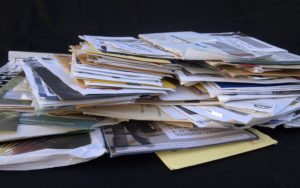 A few months ago I added a new element to my weekend ritual of shredding the name and address labels from mail received during the week. I weigh the bags before I put them in my trash hauler’s recycling container. Last week’s batch was ten pounds, including the unsolicited magazines, flyers, and catalogs on which the labels came.
 But as Frank Luntz, head of the Luntz Research Companies in Washington, D.C. points out, choosing one word over another can make a huge difference in how your company is perceived. In his book